That stain wasn’t there yesterday.
Now it’s all you see.
A faint ring.
A dark patch.
Maybe a soft spot that makes you hesitate before standing underneath it.
A water stain on ceiling surfaces can mean a dozen different things, and not all of them are disasters. The problem is knowing which kind you’re looking at.
We’ll break down what causes it, how serious it might be, and how to fix it the right way.
Key Notes
Most water stains trace to roof, plumbing, HVAC, or condensation.
Sagging, softness, or electrical contact signals urgent structural risk.
Stains require full drying and stain-blocking primer to prevent bleed-through.
Drywall, insulation, or framing may need replacement after prolonged saturation.
Is A Water Stain On A Ceiling Serious?
It always deserves investigation.
But serious can range from cosmetic annoyance to structural risk.
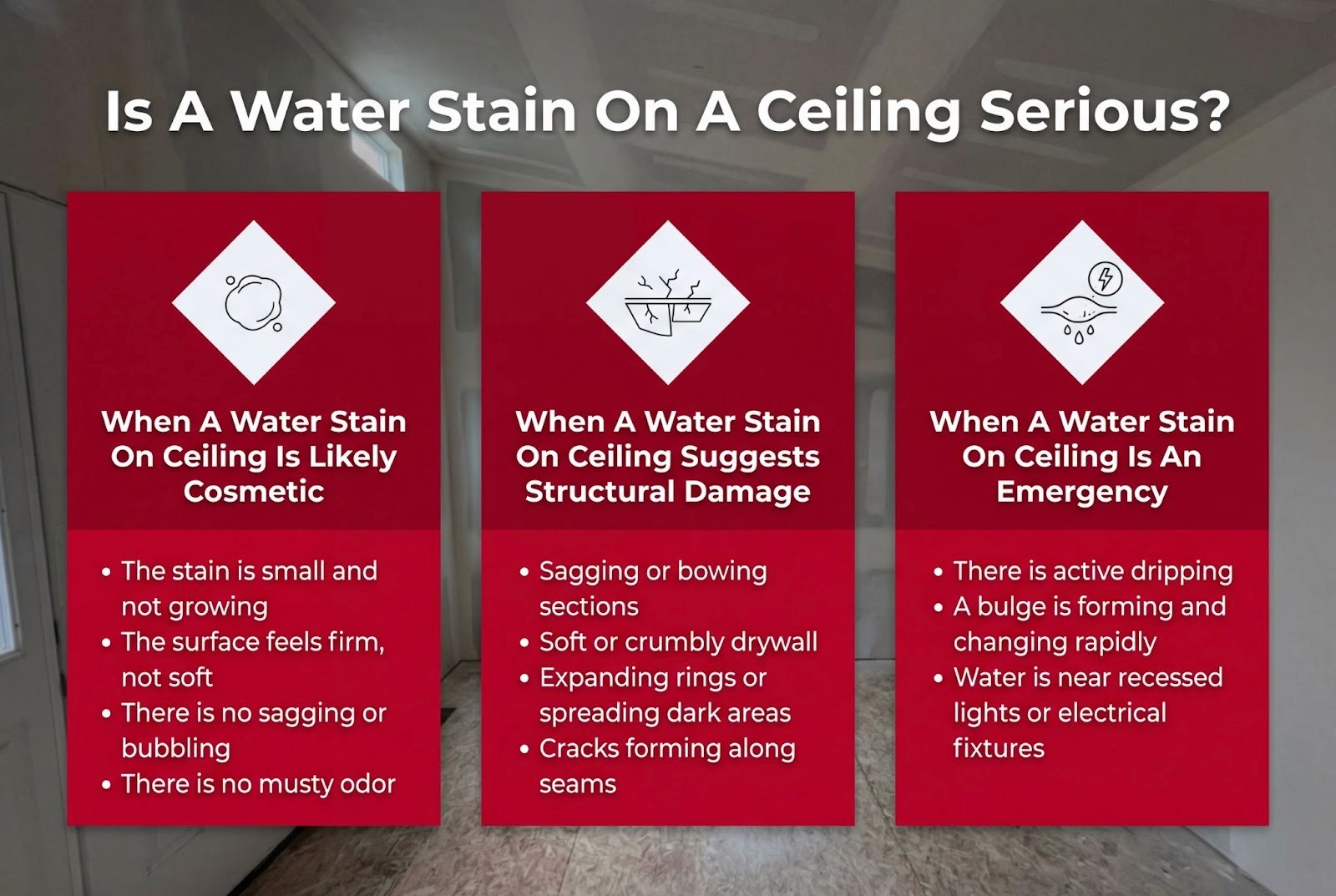
When A Water Stain On Ceiling Is Likely Cosmetic
A water stain on ceiling drywall is often cosmetic when:
The stain is small and not growing
The surface feels firm, not soft
There is no sagging or bubbling
There is no musty odor
If the leak source was already repaired and the stain has remained stable, you are likely dealing with surface discoloration rather than ongoing damage.
When A Water Stain On Ceiling Suggests Structural Damage
A water stain on ceiling materials may indicate structural concerns when you see:
Sagging or bowing sections
Soft or crumbly drywall
Expanding rings or spreading dark areas
Cracks forming along seams
Drywall loses strength quickly once saturated.
If it remains wet for more than 24 to 48 hours, mold risk increases and the gypsum core begins to break down.
When A Water Stain On Ceiling Is An Emergency
Treat it as urgent if:
There is active dripping
A bulge is forming and changing rapidly
Water is near recessed lights or electrical fixtures
Water and electricity do not mix.
If water is entering around lights or fans, turn off the breaker to that circuit before doing anything else.
The 4 Main Causes Of A Water Stain On Ceiling
Most ceiling stains fall into four main categories. Separating them properly helps you avoid chasing the wrong problem.
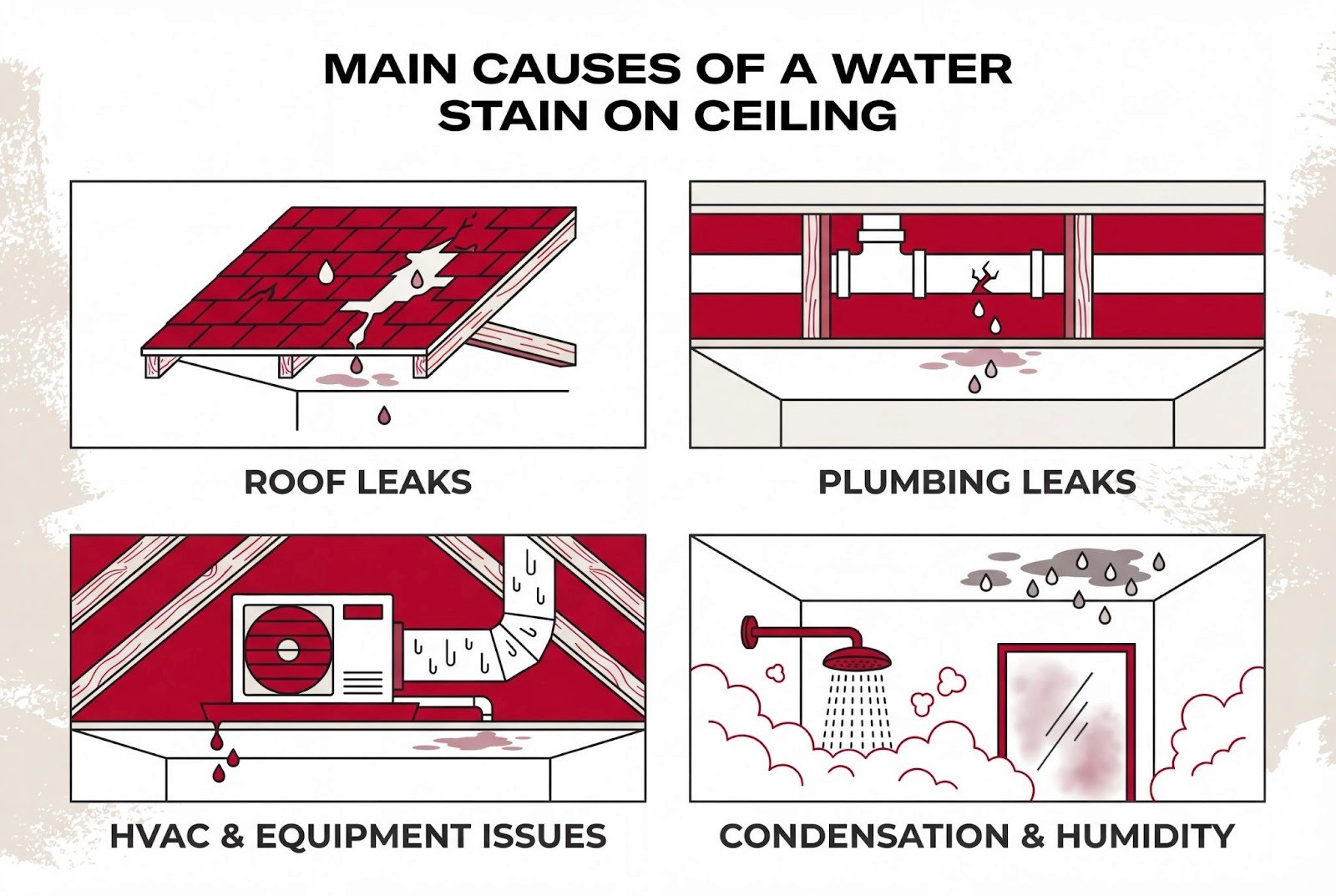
1. Roof Leaks Causing A Water Stain On Ceiling
Roof leaks are one of the most common causes of a water stain on ceiling surfaces, especially on top floors.
Clues it may be roof-related:
The stain worsens after rain
It appears near chimneys, skylights, roof valleys, or vent pipes
You see damp roof sheathing in the attic above
Flashing failures, cracked shingles, and aging vent boots are repeat offenders.
In colder climates, ice dams can push meltwater back under shingles and into ceiling assemblies.
2. Plumbing Leaks Causing A Water Stain On Ceiling
A water stain on ceiling drywall directly under a bathroom or kitchen often points to plumbing.
Common sources:
Failed toilet wax rings
Shower pan leaks
Loose drain traps
Cracked supply lines
Tub overflow or caulk failures
If the stain darkens after showers, flushing, or running a sink, plumbing moves to the top of the list.
3. HVAC & Equipment Issues
HVAC systems are a quieter but common cause of a water stain on ceiling areas.
Potential culprits:
Clogged AC condensate drain lines
Rusted or overflowing drain pans
Sweating ducts in humid air
Leaking attic air handlers
Water heaters or attic tanks can also fail and release large volumes of water into ceiling cavities.
If stains appear when AC runs and not during rain, condensate is a strong suspect.
4. Condensation & Humidity
Moisture condensation stains on ceiling surfaces often get mistaken for leaks.
Condensation stains on ceiling drywall usually look more diffuse and patchy than classic leak rings. They often appear in bathrooms, kitchens, or exterior ceiling corners.
Humidity stains on ceiling areas are common when:
Indoor humidity stays above 60%
Bathroom fans are weak or not vented outside
Attic ventilation is poor
Insulation coverage is uneven
If you have a water stain on ceiling but no leak is visible and it appears mostly in winter or after steamy showers, condensation is often the explanation.
Water Stain On Ceiling But No Leak – What’s Really Happening?
A water stain on ceiling but no leak visible does not mean moisture was imaginary. It means the event may have been intermittent, slow, or already dried at the surface.
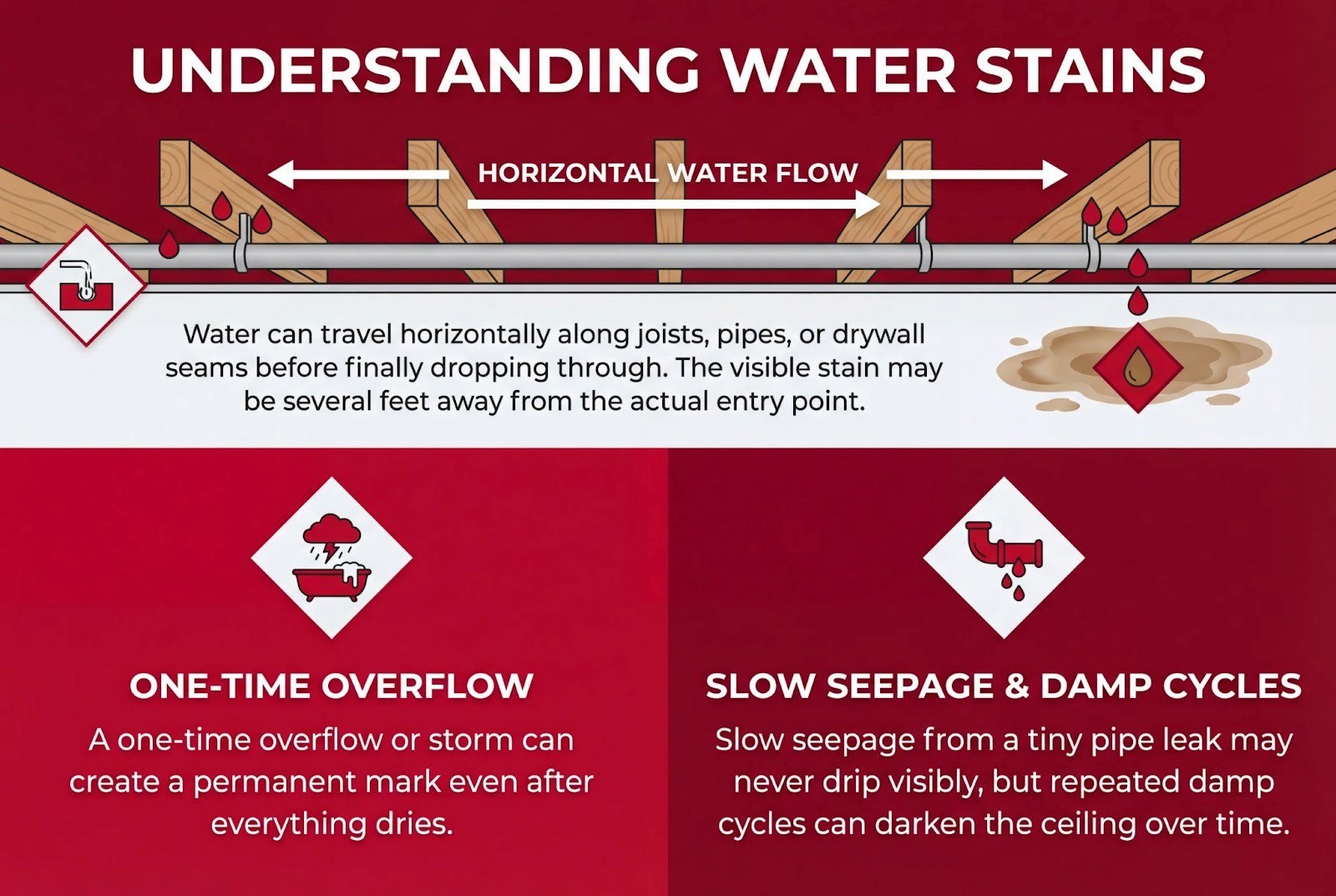
How To Tell If Water Is Leaking Behind Drywall?
Look for:
Localized bulging
Nail or screw pops
Persistent musty odor
Moisture meter readings higher than surrounding areas
Thermal imaging can also show cooler damp zones tracing back toward the source.
What To Do Immediately When You Notice A Water Stain On Ceiling
If the water stain on ceiling surfaces looks active, respond calmly but quickly.
Step 1: Protect The Area
Move valuables and furniture. Place buckets under any dripping. Lay down plastic or towels.
Step 2: Address Electrical Risk
If water is near fixtures, shut off power to that circuit at the breaker panel.
Step 3: Controlled Drain if Bulging
If the ceiling is visibly bulging, a small controlled puncture at the lowest point can safely release trapped water. Stand to the side, not directly underneath, and direct the flow into a bucket.
A controlled drain is often safer than waiting for the ceiling to burst on its own.
Step 4: Shut Off Water if Needed
If the source appears plumbing-related and water is actively flowing, turn off the main water supply.
Step 5: Begin Drying
Once the leak is stopped and power is safe, use fans and a dehumidifier to begin drying.
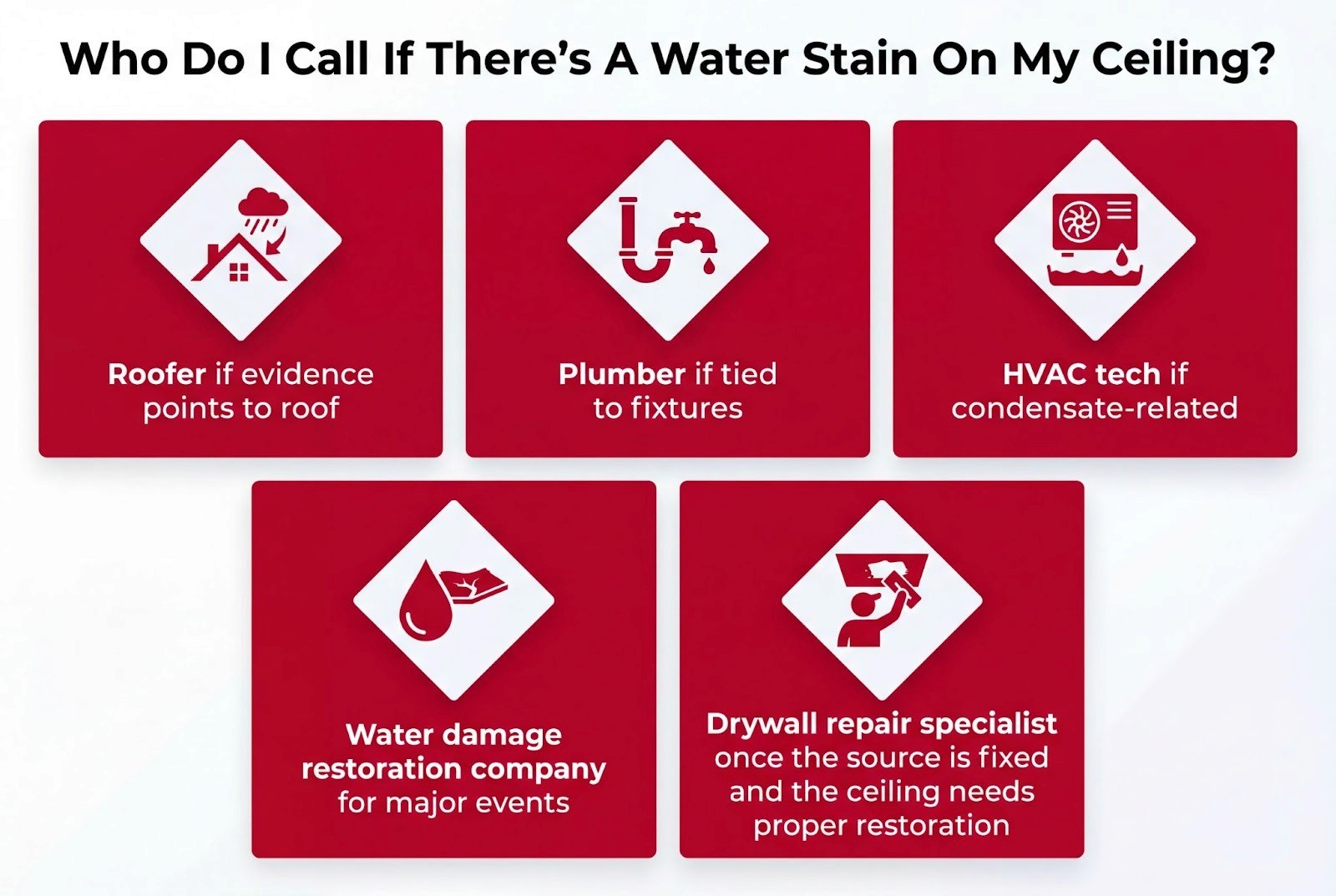
How To Trace The Source Of A Water Stain On Ceiling
A methodical approach prevents unnecessary demolition.
Start by asking when the water stain on ceiling first appeared or worsened.
After rain suggests roof
After showers suggests plumbing
When AC runs suggests condensate
Inspect the attic if accessible. Look above and upslope from the stain. Check insulation for dampness. Look for darkened roof decking or water trails.
Use a moisture meter to compare readings at the stain with those in nearby dry areas. Moisture gradients often point toward the source.
If needed, cut small inspection openings where readings are highest, not just where the stain looks darkest.
How To Fix Water Stain On Ceiling After The Leak Is Repaired
First rule is simple – do not paint over it with regular ceiling paint.
Step 1: Confirm It Is Completely Dry
The surface must feel firm and dry. Moisture meters are ideal, but at minimum there should be no cool damp sensation and no color change over several days.
Step 2: Clean The Stain
A diluted bleach solution can lighten brown stains, especially on white ceilings. This is cosmetic only. It does not seal tannins.
Step 3: Use A Stain-Blocking Primer
A stain-blocking primer is required to prevent bleed-through. Shellac-based or oil-based primers are often used for stubborn brown water stain on ceiling areas.
Standard latex paint alone will almost always allow the stain to reappear.
Step 4: Repaint & Blend
Once primed and dry, apply ceiling paint evenly. For larger areas, full-panel repainting often blends better than spot touch-ups.
Popcorn ceilings require extra care. Heavy scrubbing can remove texture. Light misting and spot priming designed for textured surfaces works better.
When Repair Is Not Enough & Replacement Is Required
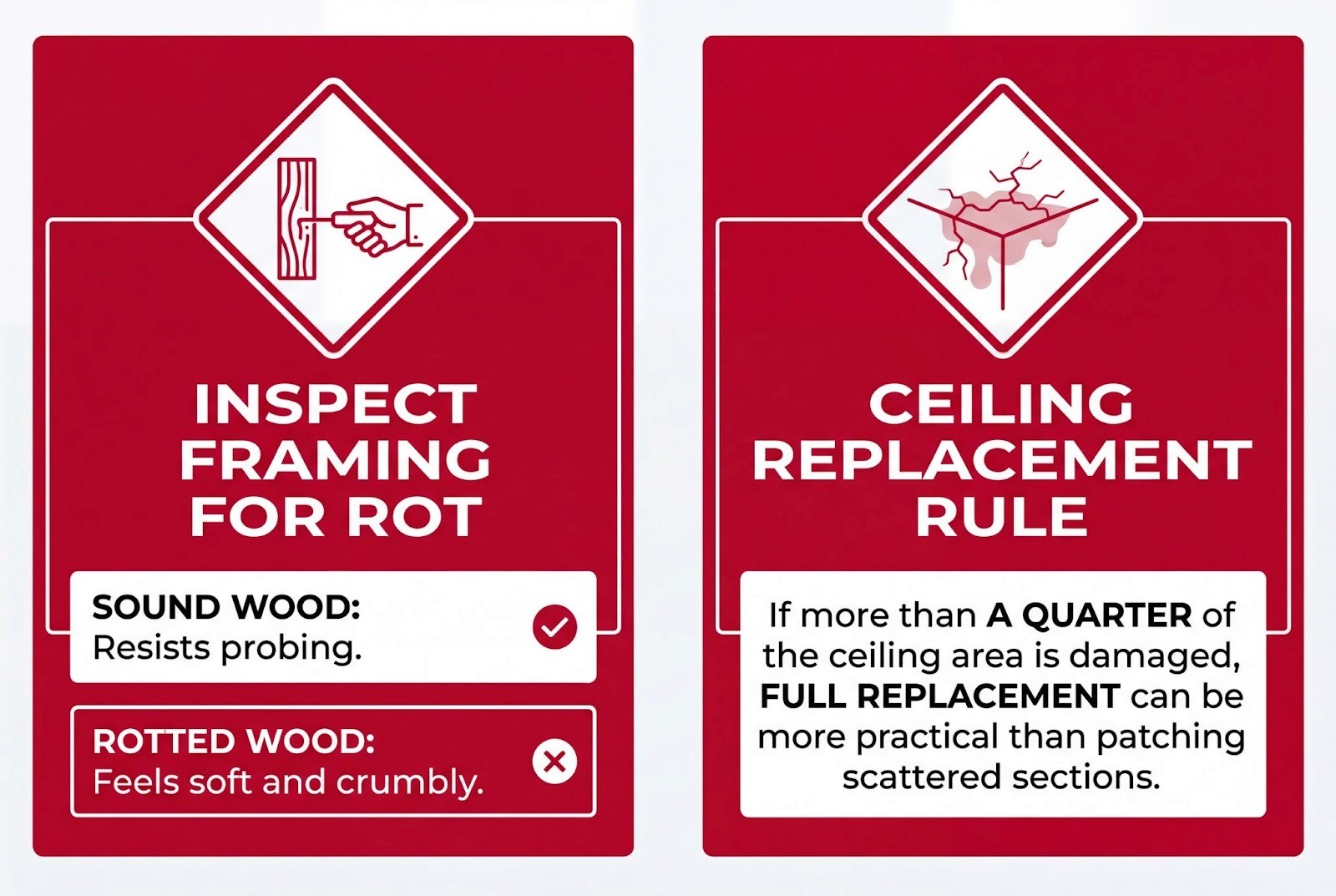
A water stain on ceiling drywall sometimes means the material itself is compromised.
Replace drywall when:
It is sagging or soft
It remained wet for more than 48 hours
Mold is present
Seams are failing across large areas
Soaked insulation loses R-value and often must be replaced if saturated beyond 48 to 72 hours.
How To Prevent A Water Stain On Ceiling In The Future
Preventing a water stain on ceiling surfaces comes down to maintenance and moisture control.
Roof Maintenance
Inspect roofing and flashing twice a year and after major storms.
Keep gutters clean so water does not back up under shingles.
Plumbing Precautions
Replace aging supply lines.
Watch for corrosion at fittings.
Address small leaks before they grow.
Condensation & Humidity Control
Keep indoor humidity between 40 and 60%.
Use bathroom fans during and after showers. Ensure fans vent outside.
Attic Ventilation & Insulation
Proper attic airflow and even insulation coverage prevent cold spots that lead to condensation stains on ceiling surfaces.
HVAC Maintenance
Service HVAC systems twice a year.
Keep condensate drains clear and drain pans intact.
Frequently Asked Questions
Can a water stain on ceiling dry out on its own?
Yes, the visible moisture can dry, but the stain and any underlying damage won’t fix themselves. Even if it looks dry, trapped moisture inside drywall or insulation can linger and cause mold or future staining.
Will a water stain on ceiling always come back after painting?
It will if you skip proper prep. Without a stain-blocking primer, brown pigments and tannins usually bleed back through regular ceiling paint within weeks or months.
Does homeowners insurance cover a water stain on ceiling repairs?
It depends on the cause. Sudden, accidental events like a burst pipe are often covered. Gradual issues, poor maintenance, or long-term leaks are typically not.
How long should I wait before repairing a water stain on ceiling?
You should wait until the source is fully repaired and the ceiling is completely dry. Rushing cosmetic repairs while moisture remains almost guarantees the stain or damage will return.
Is That Ceiling Stain Finally Ready To Disappear?
We’ll assess it on-site and leave no mess behind.
Conclusion
A water stain on ceiling drywall is a signal. It tells you moisture got in somewhere.
Sometimes it is a one-time event that left a brown ring behind.
Other times it points to soft drywall, damaged insulation, or a ceiling that needs more than just paint.
The smart order is simple: confirm the source is handled, make sure everything is fully dry, then repair and seal the surface properly so the stain does not ghost back through in a few months.
Once the leak is fixed, that is where we come in. If your ceiling needs patching, texture matching, skim coating, or repainting, request a free quote. We restore the damaged area cleanly, blend it seamlessly, and leave your space ready to move on.